


Every plant, pipeline, and processing unit depends on valves. They start the flow, stop it, control it, redirect it, and protect the entire system when pressure goes beyond safe limits. With so many designs available, the real question for any engineer or buyer is which valve fits which job.
As an industrial valve manufacturer in Ahmedabad, supplying high-pressure valves up to 50,000 PSI since 2006, we work with these products every single day. Here are the 10 most common types of industrial valves, along with where each one is used and what benefits it brings.
1. High Pressure Ball Valve
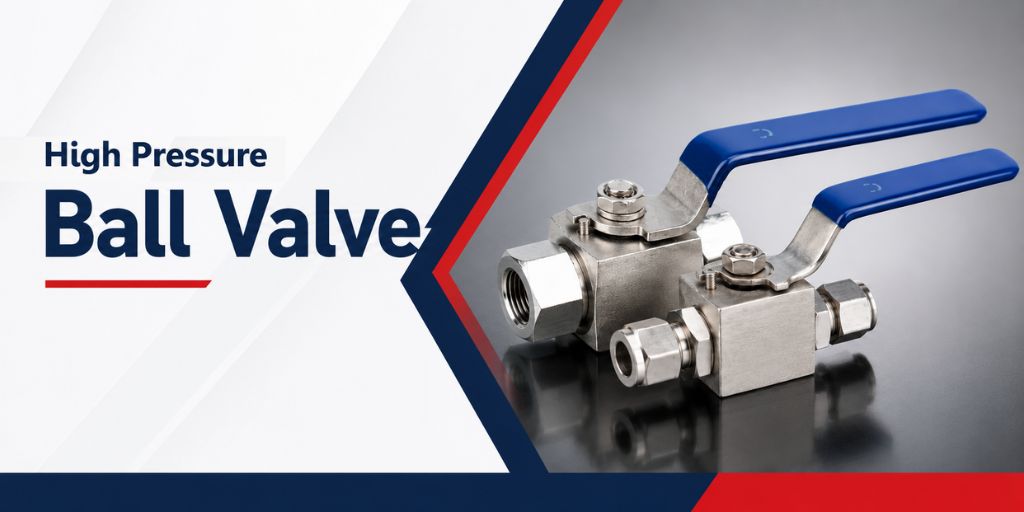
A high-pressure ball valve controls flow using a rotating ball with a hole through its center. A quarter-turn of the handle opens or closes the line completely. It is the most widely used shut-off valve in industry, and a proven high-pressure ball valve manufacturer builds these in SS 316, SS 316L, SS 304, carbon steel, and duplex with PTFE, PEEK, or POM packing for demanding service.
Applications: Oil and gas pipelines, chemical processing, hydraulic power units, hydro testing systems, water lines, and fluid transfer skids.
Benefits: Fast quarter-turn operation, tight bubble-tight sealing, long service life, low maintenance, and compact size for pressures up to 14,500 PSI (1000 bar).
2. High Pressure Needle Valve
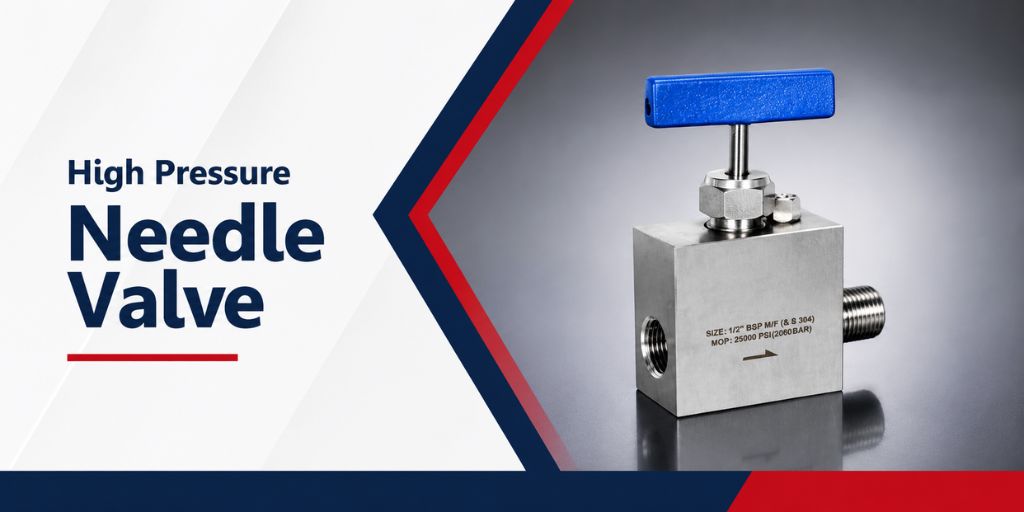
A needle valve uses a long, tapered stem that lowers into a fine seat. Each handle turn moves the stem slightly, giving very precise control over flow. Leading high-pressure needle valve manufacturers rate these valves up to 50,000 PSI (3500 bar) for the most demanding services.
Applications: Instrumentation lines, pressure gauge isolation, sampling systems, flow metering, hydro test pumps, and waterjet cutting systems.
Benefits: Accurate flow regulation, leak-tight shut-off, suitability for extreme pressures, and reliable performance in small bore lines.
3. Instrumentation Ball Valve
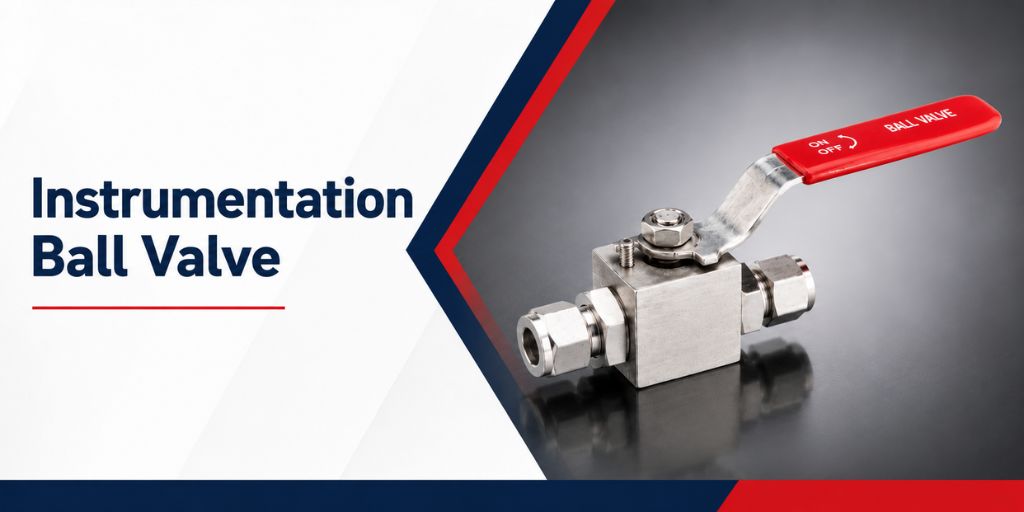
An instrumentation ball valve is a cast-body ball valve built for process instrumentation lines from 1/2″ to 4″. With screwed, socket weld, butt weld, or flanged ends and CF8, CF8M, or WCB construction, it gives reliable on-off isolation up to ANSI Class 1500 across an operating range of 14°F to 210°F.
Applications: Process instrument hookups, pressure transmitter lines, analyzer panels, oil and gas, refineries, and power plants.
Benefits: Strong cast steel body, leak-tight quarter-turn shut-off, multiple end connection choices, and flexible service across temperature and pressure ranges.
4. High Pressure Tube End Needle Valve
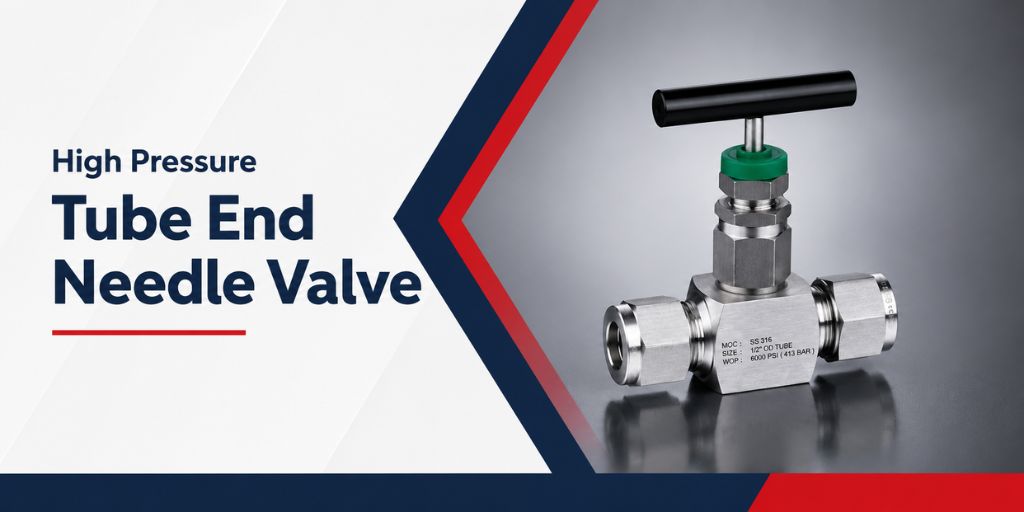
A high-pressure tube end needle valve combines needle valve precision with direct tube connections, removing the need for separate adapters between valve and tubing.
Applications: Instrument tubing runs, hydraulic and pneumatic panels, and compact installations from 1/4 inch to 1 inch or 6mm to 25mm.
Benefits: Fewer fittings and fewer leak points, clean installation, accurate flow control, and ratings up to 6,000 PSI.
5. Pressure Relief Valve
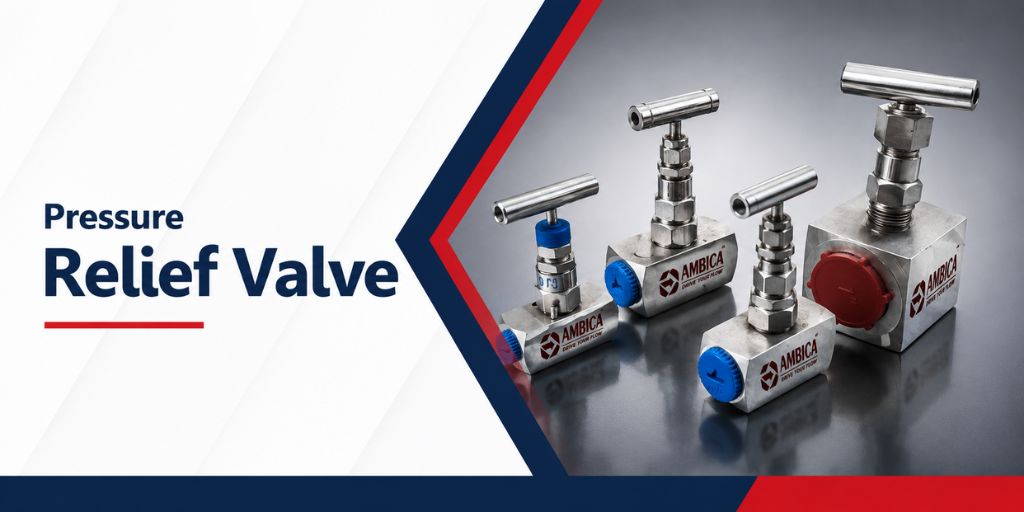
A pressure relief valve stays closed during normal operation and opens automatically when pressure crosses the set limit, venting the excess and reseating once the system returns to normal. As a pressure relief valve manufacturer with ratings up to 14,500 PSI (1000 bar), we test every valve for set pressure accuracy before dispatch.
Applications: Hydro test pumps, pressure vessels, boilers, hydraulic power units, and compressed gas systems.
Benefits: Automatic overpressure protection, protects both equipment and operators, reseats after relieving, and supports safety code compliance.
6. Multi-Port Gauge Valve
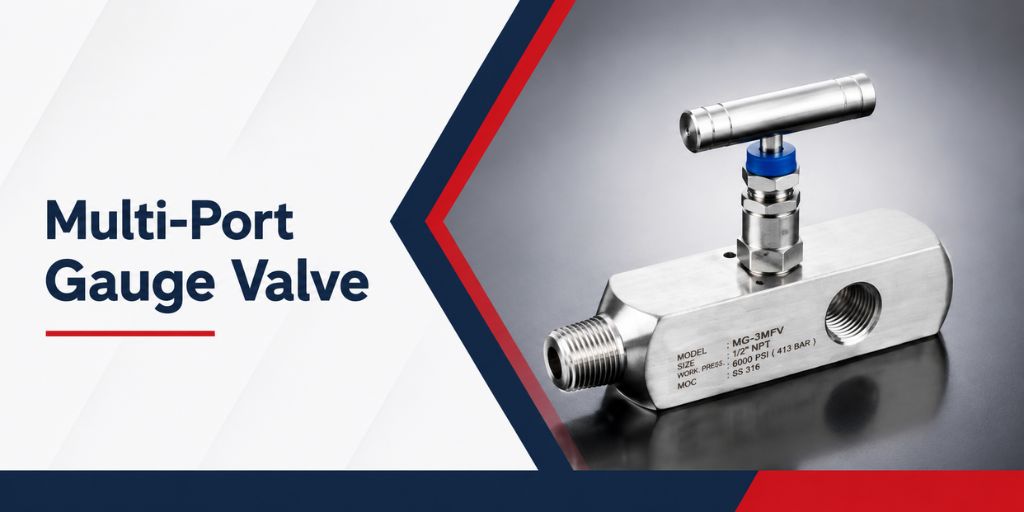
A multi port gauge valve lets one valve serve several gauge or instrument connections at a time, with ports arranged on a single body.
Applications: Pressure gauge installations, calibration setups, and test benches where multiple instruments read from one line.
Benefits: One valve replaces several, simpler piping systems, fewer joints to leak, and ratings up to 10,000 PSI.
7. Manifold Valve (2-Way, 3-Way, and 5-Way)
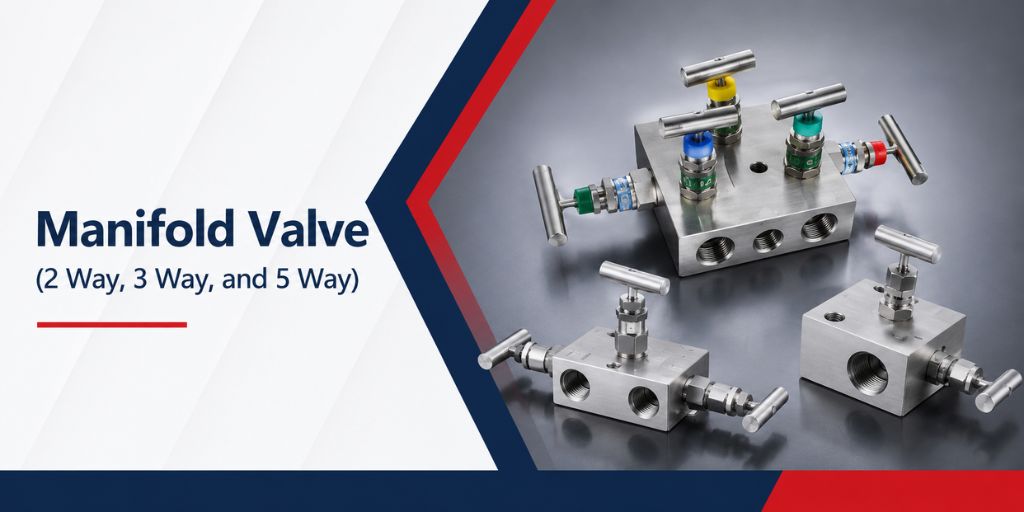
A manifold valve packs isolation, equalization, and vent functions into one machined block for pressure instruments.
Applications: Differential pressure transmitter hookups, static pressure measurement, and instrumentation panels in oil and gas, power, and process plants.
Benefits: Compact single block design, faster installation than separate valves, fewer leak paths, and ratings up to 10,000 PSI.
8. Inline Check Valve (Non-Return Valve)
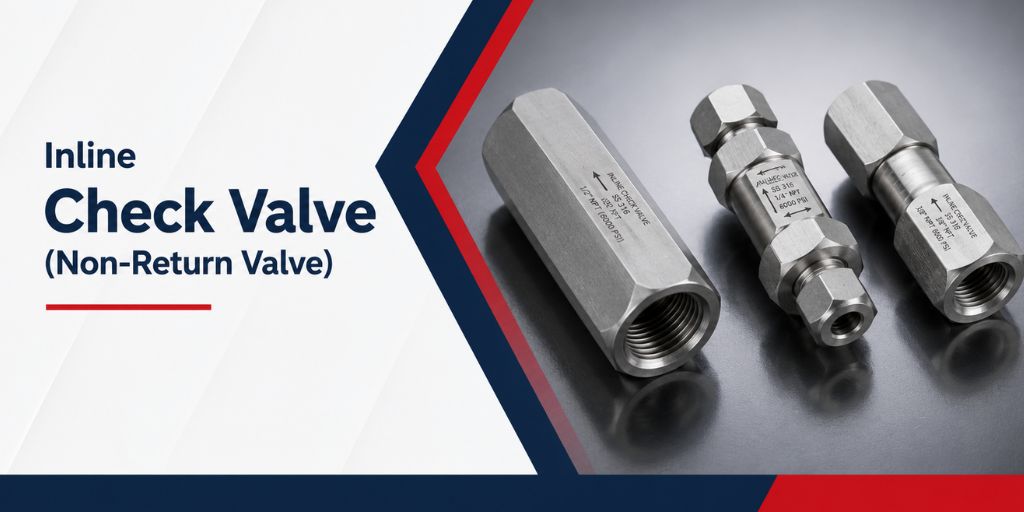
An inline check valve allows flow in one direction and closes automatically if flow tries to reverse. No handle, no operator, the flow itself does the work.
Applications: Pump discharge lines, chemical injection points, compressor outlets, and high-pressure test circuits.
Benefits: Automatic backflow prevention, protects pumps and upstream equipment, zero manual operation, and pressure ratings up to 10,000 PSI.
9. Bleed Valve
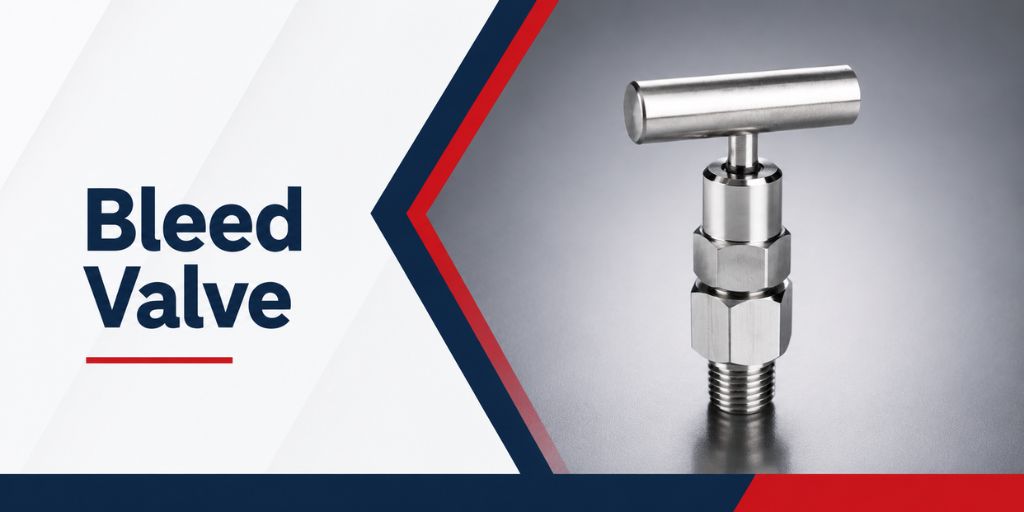
A bleed valve safely vents trapped pressure or drains residual fluid from a line before maintenance, calibration, or instrument removal, and is rated up to 10,000 PSI (700 bar) in our standard range.
Applications: Gauge and transmitter removal, depressurizing instrument lines, venting during calibration, and block and bleed arrangements.
Benefits: Safe controlled venting, protects technicians during maintenance, compact size, and simple, reliable operation.
10. I C Ball Valve
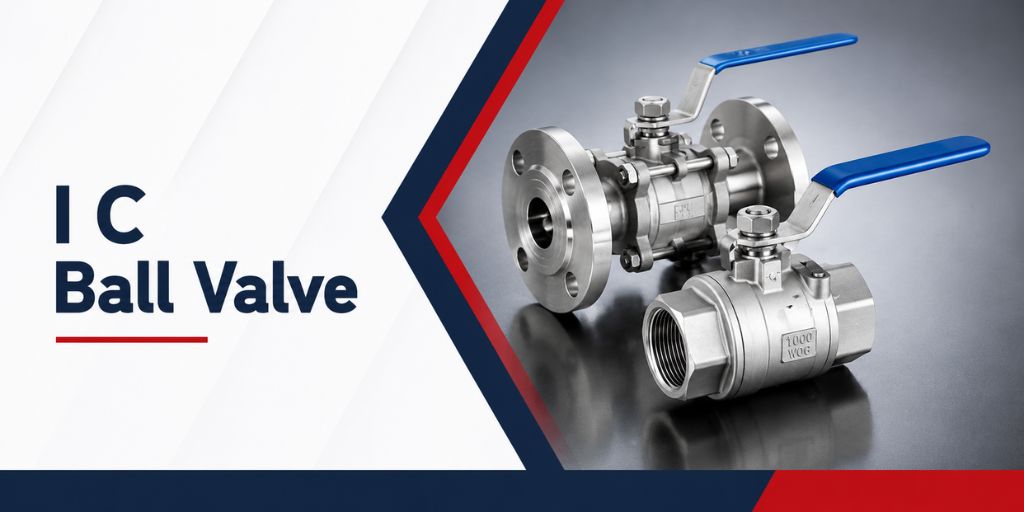
An IC ball valve, made through the investment casting process, has a smooth finish, precise dimensions, and a strong body capable of handling pressures up to 6,000 PSI and temperatures up to 1200°F (649°C).
Applications: High-temperature steam lines in power plants, chemical reactor units, sampling lines, and control panels in oil and gas refineries, and laboratory research systems.
Benefits: Leak-tight quarter-turn shut-off, performs in extreme heat up to 1200°F, strong investment cast body in SS or carbon steel, and easy integration with instrumentation tubing through tube end connections.
How to Pick the Right Valve
Valve selection becomes easy when you start with the job the valve has to do. Use this quick guide to match each duty with the right valve from our range:
- For on-off isolation: Choose a high-pressure ball valve for general service, an IC ball valve for high-temperature steam and reactor service, or an instrumentation ball valve for process instrument hookups. For oil-based hydraulic circuits up to 6,000 PSI, choose a hydraulic ball valve.
- For precise flow control: Go with a high pressure needle valve. For tubing connections without extra adapters, pick a tube end needle valve.
- For instrument hookups: Use a manifold valve for transmitter connections and a multi-port gauge valve when several gauges read from one line. Both cut down on piping and leak points.
- For backflow protection: Fit an inline check valve on pump discharge and injection lines so flow never reverses into your equipment.
- For overpressure safety: Install a pressure relief valve as the last line of defense on every pressurized system.
- For safe maintenance: Add a bleed valve at instrument points to vent trapped pressure before removing a gauge or transmitter.
Once the valve type is fixed, match three things to your system: body material to the media, pressure rating to the maximum system pressure, and end connections to your piping. Anything above 6,000 PSI calls for purpose-built high-pressure valves with tested and certified construction. We also manufacture gauge root valves, gauge cock valves, pressure snubbers, forged fittings, and quick release couplings to complete your instrumentation setup.
Frequently Asked Questions
Which type of industrial valve is best for high-pressure applications?
Ball valves and needle valves are the most reliable choices for high pressure service. Ball valves handle quick on-off duty up to 14,500 PSI, while needle valves offer precise flow control at pressures up to 50,000 PSI, which makes them ideal for hydro testing and waterjet systems.
What is the difference between a ball valve and a needle valve?
A ball valve is built for fully open or fully closed operation with a quarter-turn handle. A needle valve uses a tapered stem that moves gradually, giving fine control over flow rate. Use a ball valve for isolation and a needle valve for throttling or metering.
Why is a check valve called a non-return valve?
Because its only job is to stop the flow from returning. It opens when fluid moves in the correct direction and closes automatically the moment flow tries to reverse, protecting pumps, compressors, and upstream equipment without any manual operation.
Where is a pressure relief valve required?
A pressure relief valve is required on any pressurized system that can exceed its safe working limit, including boilers, pressure vessels, hydro test pumps, and hydraulic power units. It opens automatically at the set pressure, vents the excess, and reseats once conditions return to normal.
How do I select the right valve material for my application?
Match the material to your media and operating conditions. SS 316 suits corrosive chemicals and marine environments, SS 304 works for general industrial fluids, and carbon steel is a cost-effective choice for non-corrosive, high-pressure service. For aggressive or unusual media, share your fluid details with the manufacturer before ordering.
Conclusion
These 10 types of industrial valves handle nearly every flow control task across chemical, oil and gas, water, and process industries. Knowing the applications and benefits of each one helps you avoid leaks, cut maintenance costs, and keep your system safe.
Whether you need a ball valve, needle valve, manifold valve, check valve, pressure relief valve, or a custom high-pressure solution, our technical team can help you select the ideal valve based on your pressure rating, media, temperature, and connection requirements.
Contact us today for expert valve selection assistance, technical information, or a quotation. Call us at +91 96012 53837 or email us at info@ambicamachinetools.com